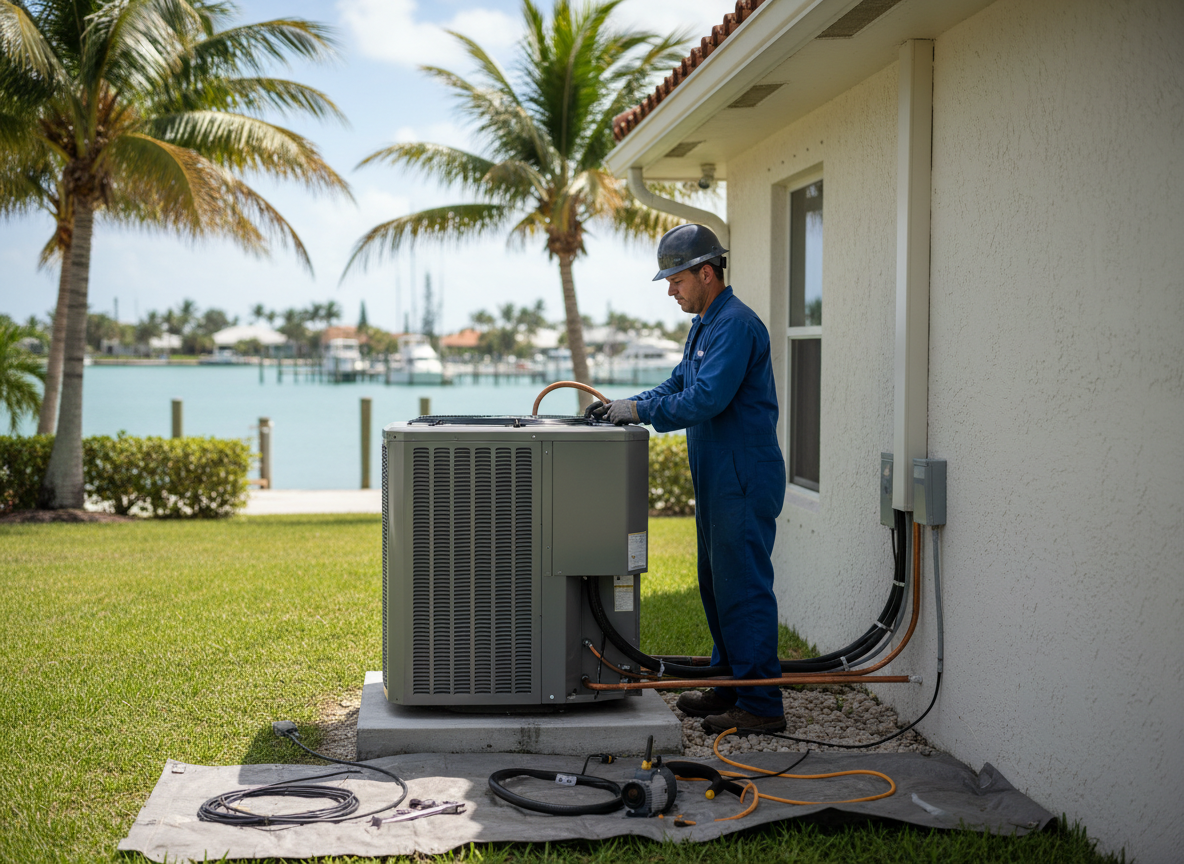
Tierra Verde homes sit on filled land near the bay where high humidity and salt spray reach indoor equipment fast. Proper load calculations must account for older concrete-block construction with single-pane windows and minimal attic insulation that lets heat soak in all day. Oversized units short-cycle, fail to pull moisture, and leave rooms clammy while undersized units run constantly and raise electric bills. We measure every room, check existing duct leakage, and select systems with coated coils and stainless hardware that resist corrosion common along the Pinellas Bayway corridor.
Installation here often requires raising the outdoor pad above the flood line and routing condensate lines to avoid standing water that breeds algae in the wet season. We seal all penetrations with UV-rated mastic because roof decks and stucco walls expand and contract daily in the Florida sun. New refrigerant lines get nitrogen purged during brazing to prevent oxidation inside the tubing, a step that protects the compressor over the long run in salty air. After startup we verify static pressure and temperature split so the system actually dehumidifies instead of just blowing cold air.
Code requirements in Pinellas County call for proper disconnects, surge protection, and permits on every change-out. We pull those permits and schedule inspections so homeowners avoid fines when selling property later. In Tierra Verde many homes still have R-22 systems; we explain the cost difference between straight replacement and upgrading to a 16-SEER or higher unit that qualifies for utility rebates while handling the heavier summer loads.
Technician insight
In Tierra Verde, the thing that catches most people out with AC installation is salt air eating through standard coils within three or four seasons; we always spec coated coils and make sure the condensate line clears the slab so it does not back up during afternoon thunderstorms.
Bayfront Condo Retrofit
A Tierra Verde condo on the water side had an aging unit that could not keep humidity below 60 percent. We found corroded coils and undersized return ducts pulling air from the garage. We installed a coated-coil system, sealed the return chase, and added a condensate pump rated for intermittent flooding. Humidity dropped and the compressor now cycles normally even on the hottest afternoons.
How it works
- 1
Site Assessment
We inspect the existing system, measure square footage, check insulation, duct condition, and electrical service at the Tierra Verde address.
- 2
Equipment Selection
We recommend units with corrosion-resistant coils sized exactly to the Manual J load, considering bay breezes and roof exposure.
- 3
Installation Day
Old equipment is removed, new lines are nitrogen-purged, the pad is elevated if needed, and all connections are sealed against salt air.
- 4
Testing and Handover
We verify airflow, temperature split, and condensate drainage, then walk the homeowner through thermostat settings and filter changes.
Pricing
Price varies by system efficiency, home size, duct modifications, and flood-zone requirements; we quote after the on-site assessment.