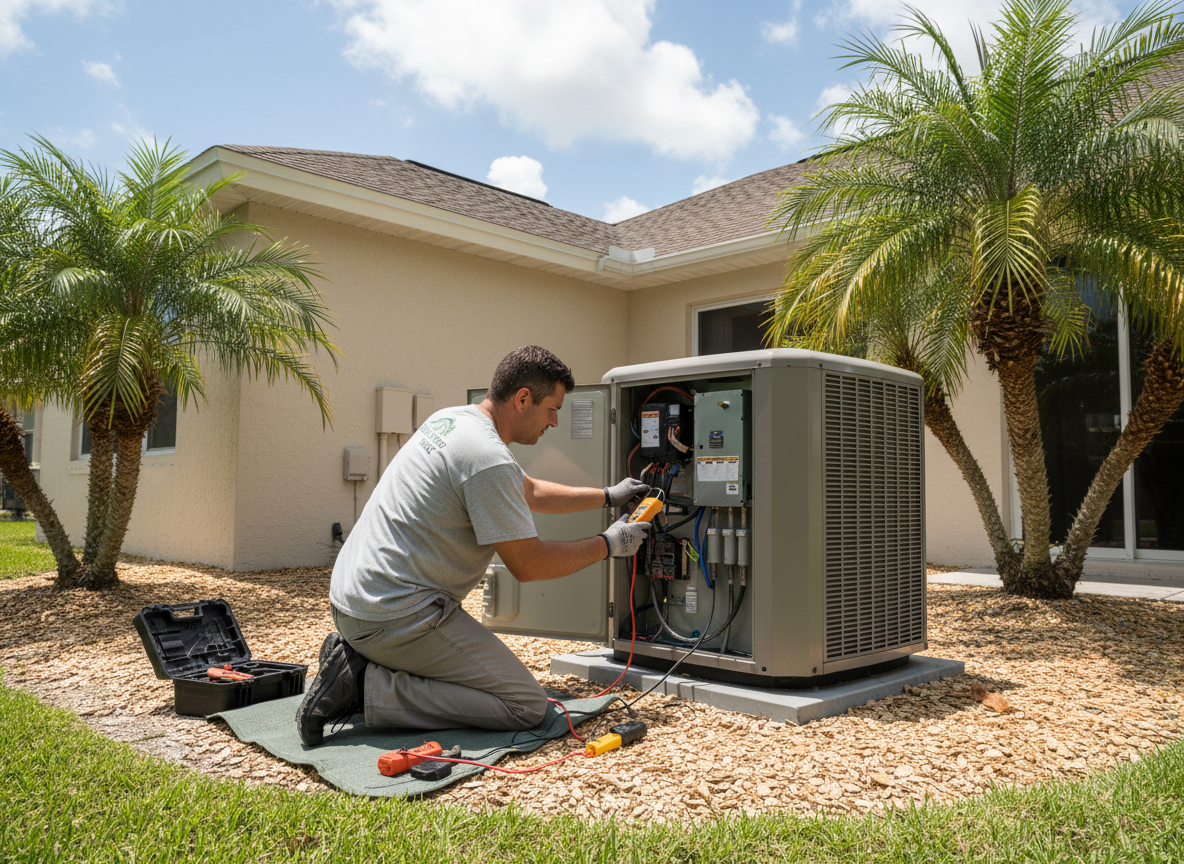
Tierra Verde homes sit on filled land surrounded by Tampa Bay and the Intracoastal, so salt-laden air reaches outdoor coils year-round. Heat pumps here run in cooling mode most months, then switch to heat during brief winter cold fronts. The constant humidity keeps condensate drains working overtime; when they clog, the indoor coil ices and the reversing valve takes extra stress. Technicians at Axis Mend carry spare contactors, defrost boards, and TXV valves sized for the R-410A units common in 1980s-2000s island construction because those parts fail faster than inland.
Many Tierra Verde properties still use original 10-12 SEER heat pumps installed when the neighborhoods were built. These older units sit on concrete pads that settle unevenly near seawalls, tilting the outdoor fan and causing blade rub. Salt pitting on aluminum fins reduces airflow long before the compressor fails, so a proper repair includes coil cleaning with non-acidic solution and checking the defrost sensor calibration against actual bay temperatures that swing quickly at dawn. Skipping the sensor check leaves the unit in defrost too long and drives up electric bills.
Pinellas County mechanical codes require proper condensate termination and GFCI protection on outdoor disconnects for any heat pump work. When replacing a reversing valve or capacitor on a waterfront lot, we also verify the line-set insulation is intact because UV and salt degrade it faster here than in central Florida. Homeowners often notice short cycling first during the afternoon thunderstorm pattern; that symptom usually traces to a failing capacitor or low refrigerant caused by a pinhole leak at a corroded flare fitting.
Coastal Corrosion Checks
Before any repair we pressure-test the system with nitrogen and inspect flare nuts and service valves for green corrosion. Salt air accelerates leaks at these points; catching them early prevents repeat compressor failures that are common on Tierra Verde properties exposed to prevailing southeast winds.
Technician insight
In Tierra Verde the thing that catches most people out with heat pump repair is salt pitting on the outdoor coil fins combined with settling pads near seawalls. The fan starts rubbing and homeowners think the compressor is dying, but real fix starts with leveling the unit and thorough coil cleaning before any major parts swap.
Defrost sensor failure on Bayway home
Homeowner reported short cycling and ice on the indoor coil during a cool January morning. Inspection found the defrost sensor had drifted due to repeated salt exposure and the outdoor unit sat slightly tilted from pad settling. We replaced the sensor, leveled the pad with composite shims, cleaned the coil, and confirmed proper defrost timing. The system now runs full cycles without icing.
How it works
- 1
Initial Diagnostic
Technician arrives, pulls error codes, and checks pressures, temperatures, and amperage draw on the existing heat pump.
- 2
Component Inspection
Outdoor coil, reversing valve, defrost board, and condensate line are examined for salt damage and clogs typical in bay-front homes.
- 3
Repair Execution
Failed parts are replaced with OEM or high-quality equivalents, system is evacuated, and proper refrigerant charge is restored.
- 4
Performance Verification
Unit is run through cooling and heating cycles while monitoring defrost operation and drain flow under local humidity conditions.
- 5
Final Walkthrough
Homeowner receives explanation of findings, any code notes, and recommendations for extending equipment life in the coastal environment.
Pricing
Upfront quote provided after on-site inspection; final cost depends on parts needed and system access on waterfront lots.