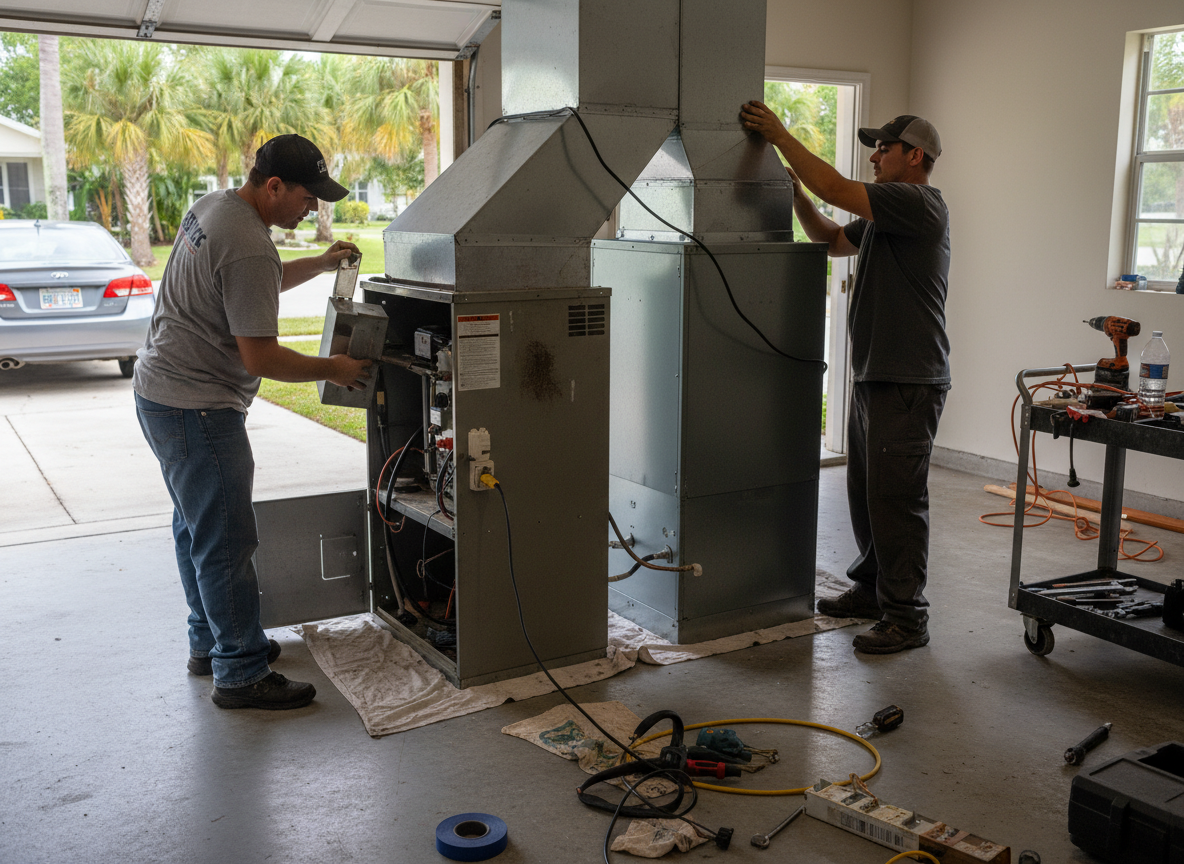
Furnace replacement in Tierra Verde requires attention to the island's coastal environment where salt air accelerates corrosion on metal components and heat exchangers. Homes here often feature older ductwork from the 1970s and 1980s that may not match modern high-efficiency units, leading to airflow restrictions if not addressed during install. Proper sizing accounts for the area's high humidity levels that can cause condensation issues inside cabinets if the new furnace lacks adequate drainage provisions.
Technicians must verify combustion air sources and venting paths because many Tierra Verde properties sit close to the water with limited exterior wall space for new terminations. Upgrading to a two-stage or variable-speed model improves comfort during the brief cool spells when temperatures dip into the 40s, while also reducing short-cycling that wears out components faster in humid conditions. Local building practices around flood zones sometimes require raised platforms, adding steps to the replacement process.
Edge cases include matching existing propane or natural gas lines that run through waterfront lots where soil movement from tides can shift connections over time. Always test for gas leaks after reassembly and confirm the new unit meets current Florida energy code requirements for AFUE ratings. Homeowners should inspect attic insulation levels beforehand because poor insulation forces the furnace to run longer cycles even during short winter periods.
Technician insight
In Tierra Verde, the thing that catches most people out with furnace replacement is how quickly salt air from the bay corrodes the heat exchanger and flue on units that sit near open water or in older canal-front homes. Homeowners often overlook checking the attic ductwork for moisture damage before we arrive, which then turns a straightforward swap into extra sealing work.
Corroded Furnace in Canal Home
A Tierra Verde canal-front residence called after inconsistent heating during a cool snap. Inspection revealed heavy corrosion on the heat exchanger from years of salt exposure. We removed the old unit, installed a new high-efficiency model on a raised platform to meet flood requirements, sealed the existing ducts against humidity, and confirmed safe operation.
How it works
- 1
Site Assessment
Measure existing ductwork, check gas line sizing, and evaluate salt exposure on the current unit in Tierra Verde homes.
- 2
Unit Selection
Recommend a properly sized furnace that handles local humidity and fits the home's layout and venting constraints.
- 3
Removal and Prep
Safely disconnect the old furnace, address any corroded duct sections, and prepare the platform or pad for the new equipment.
- 4
Installation and Testing
Set the new furnace, reconnect all lines, verify combustion and airflow, then test operation under typical winter loads.
Pricing
Upfront quotes based on home size, existing duct condition, and any needed platform or venting modifications common in coastal Tierra Verde properties.