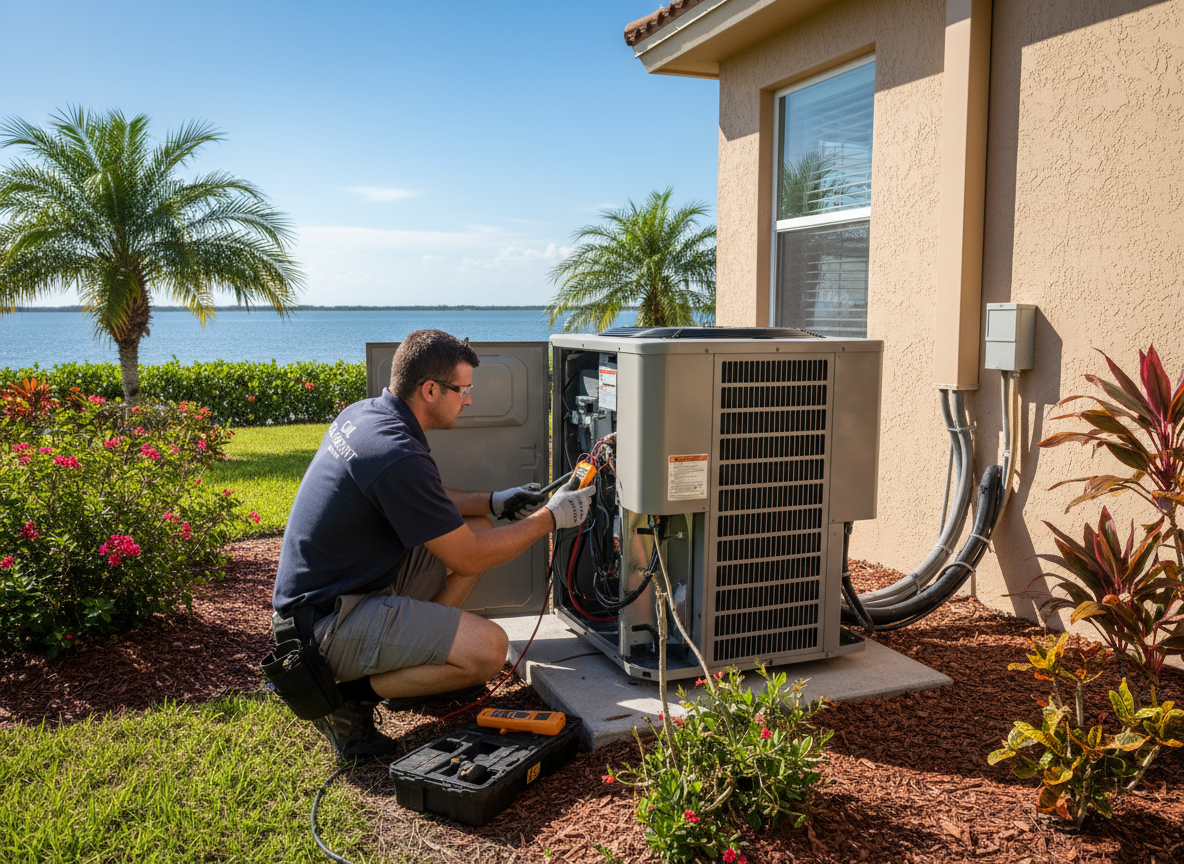
Tierra Verde homes sit exposed to constant salt air from the Gulf and Tampa Bay, which speeds up corrosion on outdoor condenser coils and copper lines. Central air repair here often starts with inspecting for pitted fins and green oxidation that reduces heat transfer long before the compressor fails. Technicians at Axis Mend check refrigerant levels and coil condition first because low charge from micro-leaks is common after only a few hurricane seasons.
High year-round humidity in Pinellas County forces systems to run extended cycles, which wears contactors and capacitors faster than inland areas. During repair we test the evaporator coil for slime buildup that blocks airflow and triggers freeze-ups even when outdoor temperatures stay moderate. Older ductwork in attics above living spaces can also collapse from moisture, so we always verify static pressure before finishing any job.
When a central air unit stops cooling in Tierra Verde, the usual sequence is to confirm power at the disconnect, then measure superheat and subcooling to isolate whether the issue is airflow, charge, or a failing component. Salt spray from nearby bridges and boat traffic accelerates fan motor bearing wear, so we replace motors with coated versions when corrosion is visible on the original.
Seasonal Salt-Air Maintenance
Coastal winds carry salt farther inland than most homeowners expect, so rinsing the condenser coil every few weeks during peak summer prevents early failure. We also check the condensate drain for algae that thrives in the warm, damp Tierra Verde climate and can back up into the evaporator.
Technician insight
In Tierra Verde the thing that catches most people out with central air repair is how fast salt air from the bay eats through the outdoor coil fins; homeowners wait until the compressor is already strained instead of catching the corrosion early on the units that sit closest to the water.
Corroded Coil on Bayside Home
Homeowner reported weak cooling on a humid afternoon. Inspection found heavy salt pitting on the condenser fins and low refrigerant from a pinhole leak. We replaced the coil with a coated unit, restored charge, and verified airflow across the evaporator.
How it works
- 1
Initial Assessment
Arrive on site and confirm the complaint while checking power, thermostat settings, and basic airflow at vents.
- 2
Diagnostic Testing
Measure pressures, temperatures, and electrical values to pinpoint whether the fault is charge, component, or airflow related.
- 3
Component Repair or Replacement
Replace corroded coils, failing capacitors, or leaking lines with parts suited to coastal conditions.
- 4
System Verification
Run the unit through a full cycle, confirm proper pressures, and check that condensate drains freely.
Pricing
Upfront quote provided after diagnostic; final cost depends on parts required and system access.