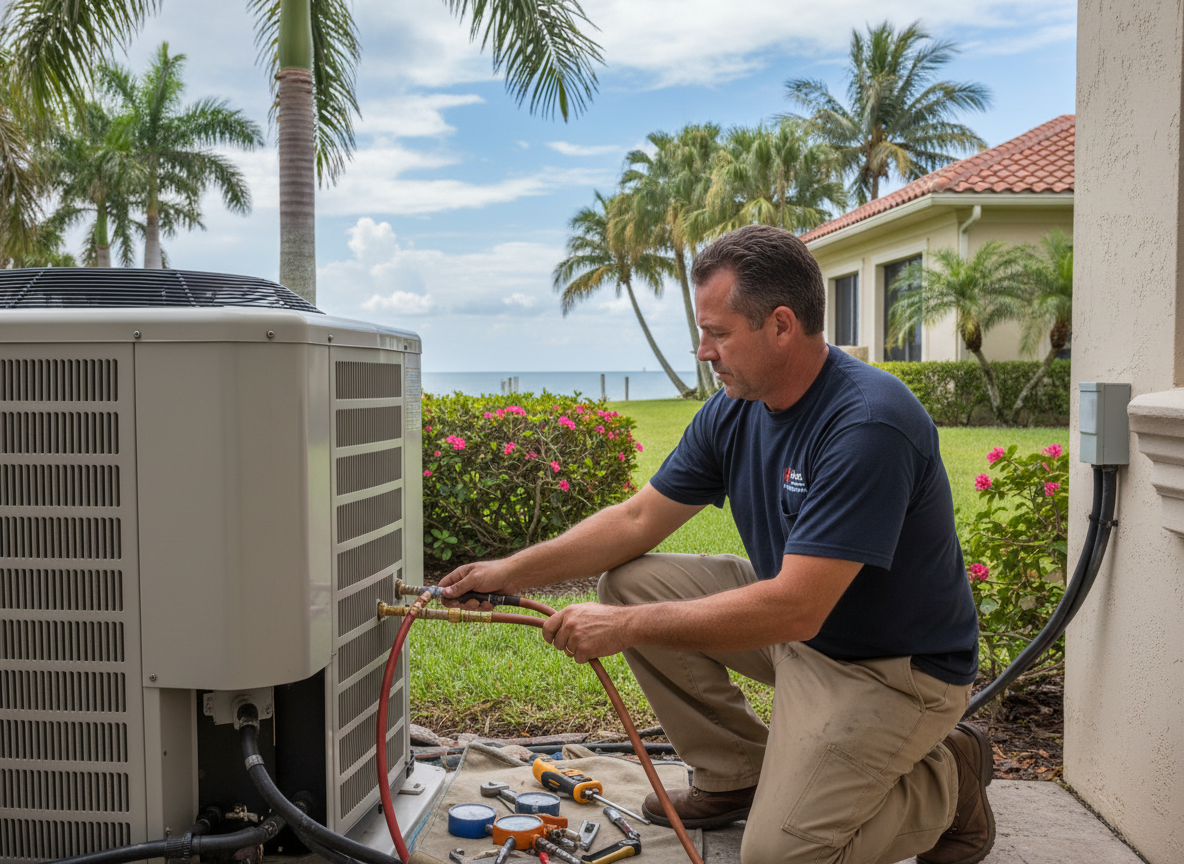
Tierra Verde homes sit on a narrow island chain in Pinellas County where constant salt air from the Gulf and Tampa Bay accelerates corrosion on outdoor condenser coils and electrical contacts. Technicians see units on elevated pilings or tight waterfront lots where airflow is restricted by landscaping and neighboring structures, forcing repairs that account for reduced ventilation and faster rust on cabinet panels. Older canal-front properties often have original ductwork running through humid crawl spaces that collect moisture and grow mold, requiring targeted cleaning or section replacement during service calls.
Summer humidity spikes combined with sudden afternoon thunderstorms create condensate drain clogs and frozen evaporator coils that homeowners first notice as uneven cooling or water stains on ceilings. Repair work here routinely includes checking for tripped breakers after power surges and inspecting contactors pitted by salt exposure rather than simple capacitor swaps common inland. Bridge access and narrow driveways on the Pinellas Bayway mean service vans carry compact tool sets and extra refrigerant recovery equipment to handle jobs without multiple trips back across the water.
Hurricane season brings additional calls for systems damaged by flying debris or flooded electrical compartments. Technicians check for bent fan blades on roof-mounted units and test capacitors that have absorbed moisture through compromised seals. These conditions make routine filter changes and coil rinsing especially important for extending equipment life in the corrosive island environment.
Technician insight
In Tierra Verde, the thing that catches most people out with Local HVAC repair is how quickly salt air from the bay corrodes the outdoor unit's coil fins and contact points on homes along the Pinellas Bayway. Homeowners often replace capacitors repeatedly without addressing the underlying corrosion that shorts them out again within months.
Corroded Contactor on Canal Home
A Tierra Verde waterfront property experienced intermittent cooling after a recent storm. Inspection revealed heavy salt buildup had pitted the contactor on the outdoor unit mounted near the seawall. The part was replaced with a sealed marine-rated version and the coil was rinsed. The system now runs without short cycling even during high-humidity afternoons.
How it works
- 1
Initial Assessment
Technician arrives at the Tierra Verde address and inspects the full system including outdoor unit, indoor air handler, and accessible duct runs while noting salt corrosion and drainage issues common to the island.
- 2
Diagnostic Testing
Electrical readings, refrigerant pressures, and airflow measurements identify the exact failure point, whether corrosion on contacts or a clogged drain line from local humidity.
- 3
Repair Execution
Parts are replaced or cleaned on site with attention to marine-grade protection where possible, followed by system restart and performance verification.
- 4
Final Review
Customer receives a written summary of findings and recommendations tailored to waterfront exposure and storm risks in Pinellas County.
Pricing
Upfront quotes provided after on-site inspection; final cost depends on parts required and access constraints typical of island properties.