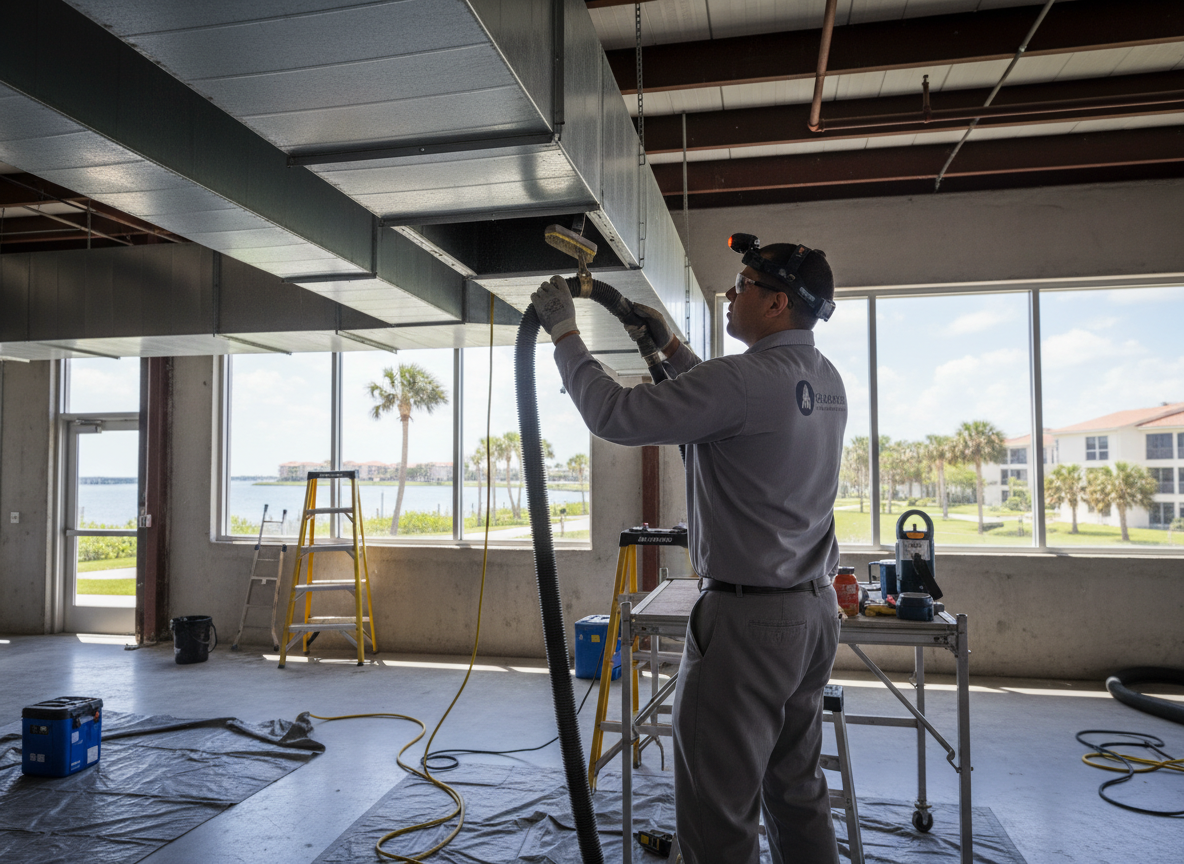
Tierra Verde sits on the barrier islands in Pinellas County where constant salt air and high humidity accelerate corrosion on ductwork, dampers, and exhaust fans. Older waterfront homes often have original metal duct runs that collect moisture and salt residue, leading to restricted airflow and mold growth inside the system. Regular maintenance involves inspecting these runs for pinhole leaks and cleaning coils that sit in unconditioned spaces above garages or in crawl areas that stay damp year-round.
Homes built before 1990 in Tierra Verde frequently lack proper outdoor air intake paths required by current Florida Building Code ventilation standards. When sea breezes push humid air through unsealed joints, static pressure rises and forces the HVAC blower to work harder. Technicians check for these pressure imbalances during maintenance by measuring airflow at each register and adjusting motorized dampers that control fresh air exchange in two-story layouts common along Pinellas Bayway.
Salt spray from the Intracoastal Waterway settles on rooftop exhaust vents and attic intake screens, clogging them faster than inland properties. This restricts the passive ventilation that many Tierra Verde residences rely on to keep attics dry during the wet season. Maintenance includes clearing these screens, resealing joints with corrosion-resistant mastic, and verifying that bath and kitchen exhaust fans still move the required cubic feet per minute without backdrafting into living spaces.
Seasonal Humidity Control
High summer dew points in the Tierra Verde area make it essential to verify that ventilation systems do not pull in unconditioned outdoor air during peak humidity hours. Checking economizer settings and ensuring motorized dampers close tightly prevents moisture spikes that lead to ceiling stains above living areas.
Common Access Challenges
Many Tierra Verde properties have low attic clearances or duct runs routed through finished soffits, requiring technicians to use inspection cameras rather than full entry. This approach avoids disturbing insulation that has settled over decades in these older island homes.
Technician insight
In Tierra Verde, the thing that catches most people out with ventilation system maintenance is salt buildup on rooftop vents that homeowners never see. The island homes along Pinellas Bayway get constant sea breeze that loads screens and joints faster than inland properties, and once corrosion starts inside the duct it spreads quickly because the air stays damp most of the year.
Restricted Airflow in a Two-Story Waterfront Home
A Tierra Verde homeowner noticed uneven temperatures between floors. Inspection revealed salt-crusted intake screens and corroded joints in the original metal ducts running through the attic. The team cleaned the screens, sealed the joints with mastic rated for coastal exposure, and rebalanced the motorized dampers. Airflow improved and humidity levels stabilized without adding new equipment.
How it works
- 1
Initial System Assessment
Technicians arrive at the Tierra Verde address and review existing duct layout, measure current airflow at multiple registers, and note any visible corrosion from salt exposure.
- 2
Component Inspection and Cleaning
Access panels are removed to clean coils, clear intake screens clogged by salt spray, and inspect dampers for proper operation in humid coastal conditions.
- 3
Airflow and Pressure Testing
Static pressure readings are taken before and after adjustments to confirm the system meets ventilation needs without creating negative pressure that pulls in moist air.
- 4
Final Documentation and Recommendations
Findings are recorded with photos of any corrosion or restricted paths, and homeowners receive notes on access points that will require attention in future visits.
Pricing
Pricing varies by home age, number of stories, and extent of corrosion found in coastal duct systems.