2026-10-24 ·
Managing High Humidity With Your HVAC In Pinellas County
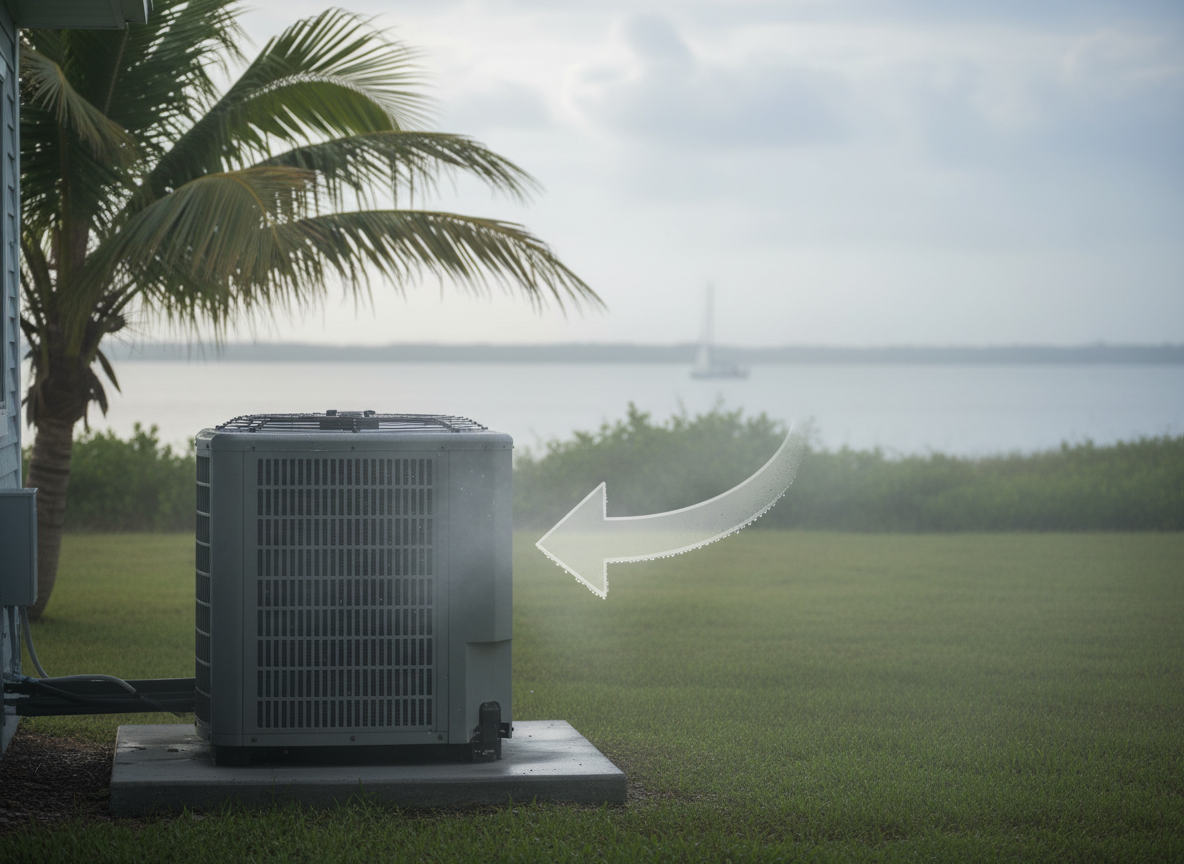
In Pinellas County, running your HVAC in cooling mode with the fan set to auto and the thermostat at 76–78°F typically holds indoor relative humidity between 45% and 55% during the humid months. This range prevents mold growth on drywall and keeps wood floors from cupping while still removing enough moisture from the salt-laden air that moves in from the Gulf.
Humidity Patterns Around Tierra Verde and Pinellas Bayway
Tierra Verde sits between Boca Ciega Bay and the Gulf, so summer dew points often stay above 70°F for weeks. Homes built in the 1970s and 1980s on the barrier islands have single-pane windows and minimal insulation, which lets outdoor moisture migrate indoors faster than in newer construction on the mainland. The constant salt air also coats evaporator coils with a thin film that reduces heat transfer, forcing the system to run longer before it reaches the temperature set point. Longer run times pull more moisture, but only if the coil stays clean and the condensate drain flows freely. Residents in Isla Del Sol and Bayway Isles notice the same issue in their canal-front properties where wind-driven moisture enters through soffits and attic vents.
Thermostat Settings and Fan Operation That Reduce Moisture
Set the thermostat to cool rather than auto or fan-only during the day so the blower stops when the compressor stops. Continuous fan operation keeps evaporating moisture off the coil and back into the house. On systems with a variable-speed blower, choose the lower speed setting labeled “dehumidify” or “humidistat” if available. This slows airflow across the coil, allowing more condensation to form. In Tierra Verde homes with two-story layouts, run the upstairs unit 1–2°F cooler than the downstairs unit because rising warm air carries extra moisture to the second floor. Check the condensate drain monthly; a clogged line in high-humidity conditions can shut the system down or cause water to back up into the air handler.
Maintenance Steps That Protect Dehumidification Performance
Change filters every 30–45 days when pollen and salt spray are heaviest. A dirty filter reduces airflow and raises coil temperature, cutting the system’s ability to condense moisture. How Often To Change HVAC Filters Near Salt Water explains the shorter intervals needed near the coast. Schedule hvac maintenance twice a year so the technician can clean the coil, verify the condensate pump works, and confirm the float switch shuts the unit off before an overflow. In homes near Fort De Soto and Pass-a-Grille, technicians also check attic insulation levels because missing insulation lets roof heat soak into the ducts and re-evaporate collected moisture.
When Short Cycling or High Humidity Signals a Larger Issue
If the system runs for only a few minutes then shuts off, it never reaches the humidity set point. What Causes Short Cycling In Florida Heat Pumps covers low refrigerant, oversized equipment, and dirty coils as common causes in this climate. In Pinellas County, an oversized unit cools the air quickly but leaves humidity behind. A service call to ac repair can measure static pressure and refrigerant charge to confirm whether the equipment matches the home’s load. For persistent humidity above 60% even after these steps, a whole-house dehumidifier tied into the return duct often brings levels down without lowering the temperature further.
Regular attention to these details keeps indoor air comfortable in Tierra Verde without relying on portable units that add heat and noise. Axis Mend operates 24/7 from 114 Pinellas Bayway S, St. Petersburg, FL 33715, USA and can respond the same day when humidity problems appear.